N1 Topic-Based Conversation — Crisis Management & Media Response
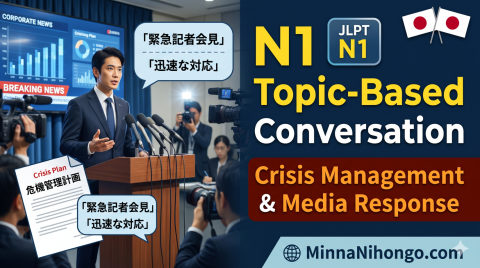
An eight-lesson N1 course on crisis management and media response: detecting a crisis, internal communication, press conferences, media interviews, customers and stakeholders, social media response, apology and accountability, and recovery and review.
Who this course is for
This course is designed for self-learners and JLPT candidates preparing for N1, with emphasis on topic-conversation, conversation through structured lessons and guided practice. Study 8 step-by-step lessons with free interactive quizzes on Minna Nihongo. Ideal if you want exam-style review, daily study habits, and measurable progress without a classroom schedule.
Lessons
- Detecting a Crisis — Learn vocabulary and expressions for recognizing early signs of a crisis, monitoring abnormalities, and escalating concerns before a situation deteriorates.
- Internal Communication — Learn vocabulary and expressions for sharing crisis information inside an organization, reporting promptly, and maintaining a clear chain of command.
- The Press Conference — Learn vocabulary and expressions for conducting a press conference, presenting facts in order, and managing questions from reporters.
- A Media Interview — Learn vocabulary and expressions for handling media interviews, clarifying context, and preventing misunderstanding.
- Customers and Stakeholders — Learn vocabulary and expressions for communicating with customers and stakeholders, ensuring fairness, and rebuilding trust.
- Social Media Response — Learn vocabulary and expressions for monitoring social media, correcting misinformation, and managing online reputation.
- Apology and Accountability — Learn vocabulary and expressions for offering a sincere apology, accepting responsibility, and preventing recurrence.
- Recovery and Review — Learn vocabulary and expressions for restoring operations, reviewing causes, and building stronger prevention.
Sample vocabulary from this course
- 兆候(ちょうこう) (兆候): sign or omen of a crisis
- 記者会見(きしゃかいけん) (記者会見): press conference
- 社内共有(しゃないきょうゆう) (社内共有): internal information sharing
- 顧客(こきゃく) (顧客): customer
- メディアインタビュー (メディアインタビュー): media interview
- 察知(さっち) (察知): detecting or sensing in advance
- 質問(しつもん) (質問): question
- 発表(はっぴょう) (発表): announcement
- 報告(ほうこく) (報告): reporting
- 関係者(かんけいしゃ) (関係者): stakeholder or party concerned
- 異常(いじょう) (異常): abnormality or irregularity
- 司会(しかい) (司会): moderation or chairing
- 取引先(とりひきさき) (取引先): business partner or client company
- 連絡(れんらく) (連絡): contact or communication
- 回答(かいとう) (回答): answer or response
- 指揮系統(しきけいとう) (指揮系統): chain of command
- 逸脱(いつだつ) (逸脱): deviation from the standard
- 投資家(とうしか) (投資家): investor
- 引用(いんよう) (引用): quotation
- 報道陣(ほうどうじん) (報道陣): members of the press
- 閾値(いきち) (閾値): threshold level
- 質疑応答(しつぎおうとう) (質疑応答): question-and-answer session
- 速報(そくほう) (速報): breaking report or first bulletin
- 文脈(ぶんみゃく) (文脈): context
- 株主(かぶぬし) (株主): shareholder
- 予兆(よちょう) (予兆): precursor or early warning sign
- 印象(いんしょう) (印象): impression
- 原稿(げんこう) (原稿): prepared statement or manuscript
- 従業員(じゅうぎょういん) (従業員): employee
- 暫定報告(ざんていほうこく) (暫定報告): preliminary report
- 告知(こくち) (告知): notice or announcement to users
- 事前確認(じぜんかくにん) (事前確認): advance confirmation
- 情報取扱(じょうほうのとりあつかい) (情報取扱): information handling
- 悪化(あっか) (悪化): deterioration
- 冒頭(ぼうとう) (冒頭): opening or outset
- 事実関係(じじつかんけい) (事実関係): facts of the case
- 混乱(こんらん) (混乱): confusion or disorder
- 機密(きみつ) (機密): confidentiality or secret
- 録音(ろくおん) (録音): audio recording
- 補償(ほしょう) (補償): compensation