Katakana for Beginners
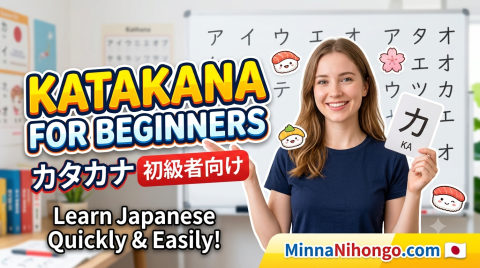
Learn all of katakana step by step, row by row: A-I-U-E-O, KA-KI-KU-KE-KO and more. Each lesson gives you readings, loanwords, short dialogues, listening practice and exercises.
Who this course is for
This course is designed for self-learners and JLPT candidates preparing for N5, with emphasis on vocabulary through structured lessons and guided practice. Study 17 step-by-step lessons with free interactive quizzes on Minna Nihongo. Ideal if you want exam-style review, daily study habits, and measurable progress without a classroom schedule.
Lessons
- ア・イ・ウ・エ・オ — A I U E O — The five vowels in katakana: ア (a), イ (i), ウ (u), エ (e), オ (o).
- カ・キ・ク・ケ・コ — KA KI KU KE KO — The K row in katakana: カ (ka), キ (ki), ク (ku), ケ (ke), コ (ko).
- サ・シ・ス・セ・ソ — SA SHI SU SE SO — The S row in katakana: サ (sa), シ (shi), ス (su), セ (se), ソ (so).
- タ・チ・ツ・テ・ト — TA CHI TSU TE TO — The T row in katakana: タ (ta), チ (chi), ツ (tsu), テ (te), ト (to).
- ナ・ニ・ヌ・ネ・ノ — NA NI NU NE NO — The N row in katakana: ナ (na), ニ (ni), ヌ (nu), ネ (ne), ノ (no).
- ハ・ヒ・フ・ヘ・ホ — HA HI FU HE HO — The H row in katakana: ハ (ha), ヒ (hi), フ (fu), ヘ (he), ホ (ho).
- マ・ミ・ム・メ・モ — MA MI MU ME MO — The M row in katakana: マ (ma), ミ (mi), ム (mu), メ (me), モ (mo).
- ヤ・ユ・ヨ — YA YU YO — The Y row in katakana: ヤ (ya), ユ (yu), ヨ (yo).
- ラ・リ・ル・レ・ロ — RA RI RU RE RO — The R row in katakana: ラ (ra), リ (ri), ル (ru), レ (re), ロ (ro).
- ワ・ヲ・ン — WA WO N — The last three basic katakana: ワ (wa), ヲ (wo, used as a particle) and ン (n, a syllable on its own).
- ガ・ギ・グ・ゲ・ゴ — GA GI GU GE GO — Add two small marks (dakuten) to the K row of katakana and you get the G row: ガ (ga), ギ (gi), グ (gu), ゲ (ge), ゴ (go).
- ザ・ジ・ズ・ゼ・ゾ — ZA JI ZU ZE ZO — The Z row in katakana comes from the S row plus two marks: ザ (za), ジ (ji), ズ (zu), ゼ (ze), ゾ (zo).
- ダ・ヂ・ヅ・デ・ド — DA DE DO (and ヂ ヅ) — The D row in katakana: ダ (da), ヂ (ji), ヅ (zu), デ (de), ド (do). ヂ and ヅ sound the same as ジ and ズ and are rarely used.
- バ・ビ・ブ・ベ・ボ — BA BI BU BE BO — The B row in katakana comes from the H row plus two marks: バ (ba), ビ (bi), ブ (bu), ベ (be), ボ (bo).
- パ・ピ・プ・ペ・ポ — PA PI PU PE PO — The P row in katakana comes from the H row plus a small circle (handakuten): パ (pa), ピ (pi), プ (pu), ペ (pe), ポ (po).
- キャ・シャ・チャ・ニャ — Combined sounds 1 — Write a small ャ ュ ョ after an i-column letter to make one syllable: キャ (kya), シャ (sha), チャ (cha), ニャ (nya) and so on.
- ヒャ・リャ・ギャ・ジャ — Combined sounds 2 and foreign sounds — More combined sounds: ヒャ (hya), ミャ (mya), リャ (rya), ギャ (gya), ジャ (ja), ビャ (bya), ピャ (pya), plus extra sounds for foreign words such as ティ (ti), ファ (fa) and ウィ (wi).
Sample vocabulary from this course
- タクシー (タクシー): taxi
- カメラ (カメラ): camera
- アイス (アイス): ice cream
- ナイフ (ナイフ): knife
- サラダ (サラダ): salad
- コーヒー (コーヒー): coffee
- チーズ (チーズ): cheese
- エアコン (エアコン): air conditioner
- ニュース (ニュース): news
- スキー (スキー): ski, skiing
- ケーキ (ケーキ): cake
- ツアー (ツアー): tour
- ヌードル (ヌードル): noodles
- セーター (セーター): sweater
- イタリア (イタリア): Italy
- ソース (ソース): sauce
- ウール (ウール): wool
- クラス (クラス): class
- テレビ (テレビ): TV, television
- ネクタイ (ネクタイ): necktie
- トマト (トマト): tomato
- オレンジ (オレンジ): orange
- ノート (ノート): notebook
- カレー (カレー): curry
- サイズ (サイズ): size
- アメリカ (アメリカ): America
- テーブル (テーブル): table
- キロ (キロ): kilo (kilogram, kilometer)
- ナース (ナース): nurse
- スーツ (スーツ): suit
Sample kanji from this course
- サ sa: sa
- ア a: a
- タ ta: ta
- ナ na: na
- カ ka: ka
- シ shi: shi
- キ ki: ki
- ニ ni: ni
- チ chi: chi
- イ i: i
- ク ku: ku
- ウ u: u
- ヌ nu: nu
- ス su: su
- ツ tsu: tsu
- テ te: te
- エ e: e
- セ se: se
- ケ ke: ke
- ネ ne: ne
- コ ko: ko
- ソ so: so
- オ o: o
- ト to: to