JLPT N5 Vocabulary by Topic
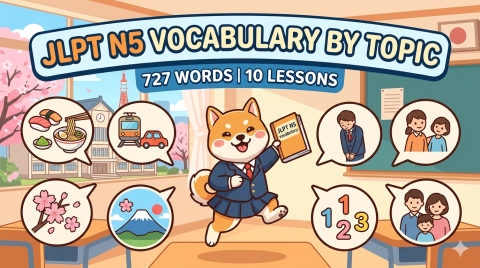
JLPT N5 vocabulary organized by topic. 727 words across 10 lessons.
This course organizes all JLPT N5 vocabulary into topic groups — greetings, family, time, common verbs, adjectives, and daily life — instead of one long alphabetical list. Studying by topic makes words easier to recall together, since related words reinforce each other in memory.
Each topic includes kanji, romaji, and English meaning, plus practice quizzes to test recall before moving to the next group.
Why study N5 vocabulary by topic instead of by frequency list?
Random frequency-ordered lists are efficient for coverage but hard to retain — unrelated words don't reinforce each other. Topic grouping (for example, all family words together) creates natural associations that speed up recall, especially useful for beginners still building basic sentence patterns.
Who this course is for
This course is designed for self-learners and JLPT candidates preparing for N5, with emphasis on vocabulary through structured lessons and guided practice. Study 10 step-by-step lessons with free interactive quizzes on Minna Nihongo. Ideal if you want exam-style review, daily study habits, and measurable progress without a classroom schedule.
Lessons
- Greetings, Basic Communication & Grammar Particles — JLPT N5 vocabulary topic: Greetings, Basic Communication & Grammar Particles. 36 words.
- Pronouns, Demonstratives & Question Words — JLPT N5 vocabulary topic: Pronouns, Demonstratives & Question Words. 46 words.
- Family & People — JLPT N5 vocabulary topic: Family & People. 36 words.
- Body & Health — JLPT N5 vocabulary topic: Body & Health. 41 words.
- Time, Dates & Calendar — JLPT N5 vocabulary topic: Time, Dates & Calendar. 91 words.
- Numbers & Units of Measurement — JLPT N5 vocabulary topic: Numbers & Units of Measurement. 53 words.
- Home, Rooms & Objects — JLPT N5 vocabulary topic: Home, Rooms & Objects. 67 words.
- Food & Dining — JLPT N5 vocabulary topic: Food & Dining. 35 words.
- Clothing & Colors — JLPT N5 vocabulary topic: Clothing & Colors. 27 words.
- Places, Transportation & Directions — JLPT N5 vocabulary topic: Places, Transportation & Directions. 44 words.
Sample vocabulary from this course
- ああ: Ah!, Oh!
- あき (秋): autumn, fall
- あに (兄): (hum) older brother
- あし (足): foot, leg
- あそこ: there, over there, that place
- あたま (頭): head
- あね (姉): (hum) older sister
- いい/よい: good
- あちら: there, yonder, that
- あさ (朝): morning
- あまい (甘い): generous, sweet
- あさって: day after tomorrow
- あっち: over there
- いしゃ (医者): doctor (medical)
- いいえ: no, not at all
- あした: tomorrow
- いもうと (妹): younger sister
- あなた: you
- いたい (痛い): painful
- ええ: yes
- いち (一): one
- お~: honourable ~ (honorific)
- あの: that over there
- おかあさん (お母さん): (hon) mother
- いちにち (一日): 1 day (duration)
- いちばん: best, first, number one
- おなか: stomach
- ~がる: feel
- あの: um...
- おくさん (奥さん): (hon) wife
- いつか (五日): five days, the fifth day (of the month)
- あれ: that, that thing
- かお (顔): face (person)
- ~がわ (側): ~ side
- おじ・さん (伯父/叔父・さん): uncle, middle aged man
- かぜ (風邪): cold, illness
- ください: (with te-form verb) please do for me
- おじいさん: grandfather, male senior citizen
- いくつ: how many?, how old?
- いつつ (五つ): five
Editorial policy and team · Contact
How should I use this course?
Go through one topic every 2–3 days rather than rushing through all topics at once. After each topic, test yourself with the quizzes before starting the next — active recall retains vocabulary far better than re-reading. Once you've covered several topics, take a JLPT N5 mock test to see how well the vocabulary holds up under timed conditions.
For writing practice, pair each topic with the Kanji Look and Learn course so characters stick inside real N5 words instead of as isolated flashcards.
Frequently asked questions
- How many words does this course cover?
- It covers the core JLPT N5 vocabulary set, organized across major topic groups with kanji, romaji, and meanings.
- Do I need to know hiragana first?
- Yes. Basic hiragana and katakana reading is assumed. If you are still learning kana, practice those first, then return to this vocabulary course.
- Is this course free?
- Yes. The course is free to study online — create an account, join the course, then open lessons. No paid subscription is required.
- How is this different from a flashcard app?
- Words are grouped by topic with context, not only as isolated cards, which makes it easier to build sentence-level understanding alongside memorization.